Steam's AI Rollercoaster: The Games Valve Rejected, and How the Policy Actually Changed
In the summer of 2023, a handful of indie developers found out the hard way that Steam had a stance on AI-generated art. They never saw it written down anywhere. They just submitted their games, waited, and got rejected.
What followed was about seven months of Valve figuring out its position in public, reversing course, and eventually landing on a policy that most devs now barely think about. If you're building 2D games and using AI tools anywhere in your pipeline, the history here is worth knowing, because the rules are calmer than the headlines made them sound, but they're not nothing.
June 2023: the quiet rejections
The first cracks showed up on Reddit in late June 2023. A developer posted that Valve had bounced their game from Steam because it contained AI-generated assets. The rejection notice was specific, and it became the line everyone quoted for the next year:
"As the legal ownership of such AI-generated art is unclear, we cannot ship your game while it contains these AI-generated assets, unless you can affirmatively confirm that you own the rights to all of the IP used in the data set that trained the AI to create the assets in your game."
Read that again, because the logic matters. Valve wasn't saying AI art looked bad or felt cheap. It was saying it couldn't verify that the training data behind a Stable Diffusion or Midjourney model was clean of other people's copyrighted work. And it put the burden of proof on the developer, which in 2023 was an impossible bar to clear. Nobody could affirmatively confirm what was in the LAION dataset.
The developer said they tried again a week later with the AI assets still in the game, and got rejected a second time. Word spread fast. Within days the story was on Kotaku, VGC, and most of the gaming press, usually under some version of the headline "Valve is banning AI games."
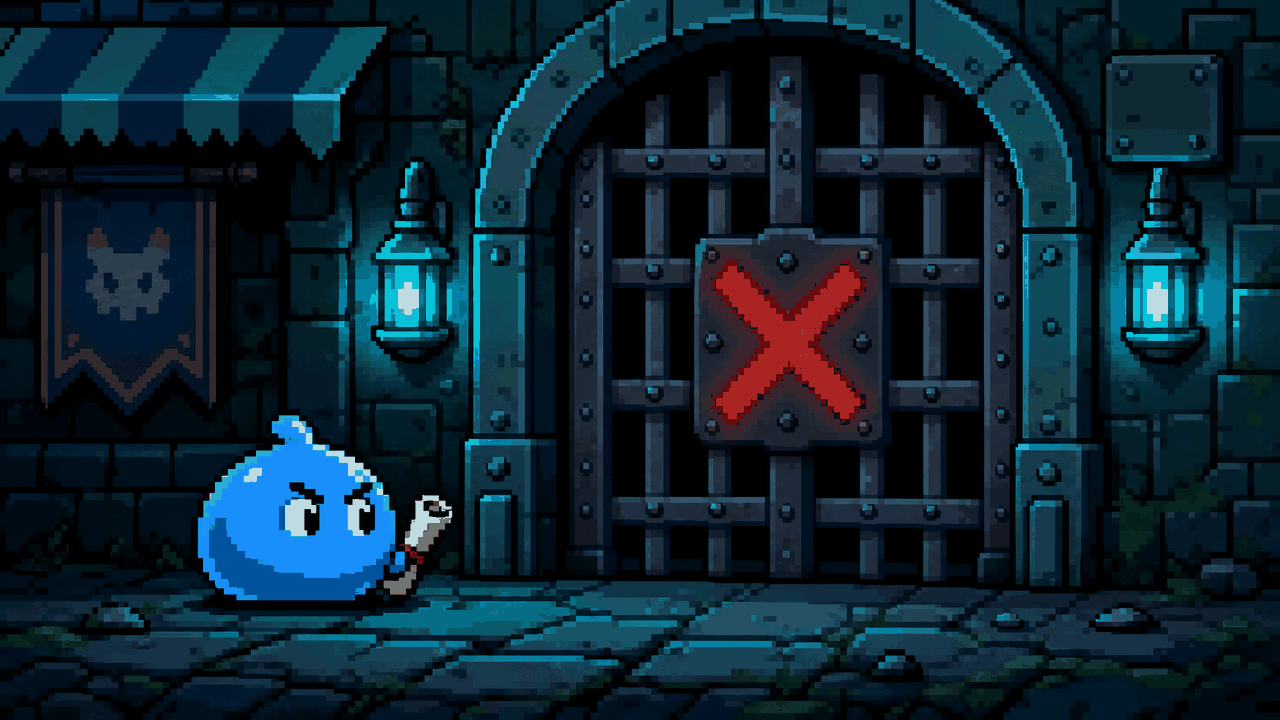
Valve's response: not a ban, a copyright problem
On July 3, 2023, Valve broke its usual silence. It told TechCrunch and Eurogamer that the framing was wrong. This is the part people forget:
"We know it is a constantly evolving tech, and our goal is not to discourage the use of it on Steam... Stated plainly, our review process is a reflection of current copyright law and policies, not an added layer of our opinion."
Valve also said it would refund the submission fee when a game got rejected over this, which is a small detail that tells you they knew the policy was a placeholder, not a principle. They were stalling. The legal ground was shifting under everyone in 2023, the US Copyright Office was issuing its first guidance on AI works around the same time, and Valve didn't want to be the storefront that shipped a game built on infringing assets and ate the lawsuit.
So the read was always: this is temporary, and it's about provenance, not aesthetics. That turned out to be exactly right.
January 2024: the policy flip to disclosure
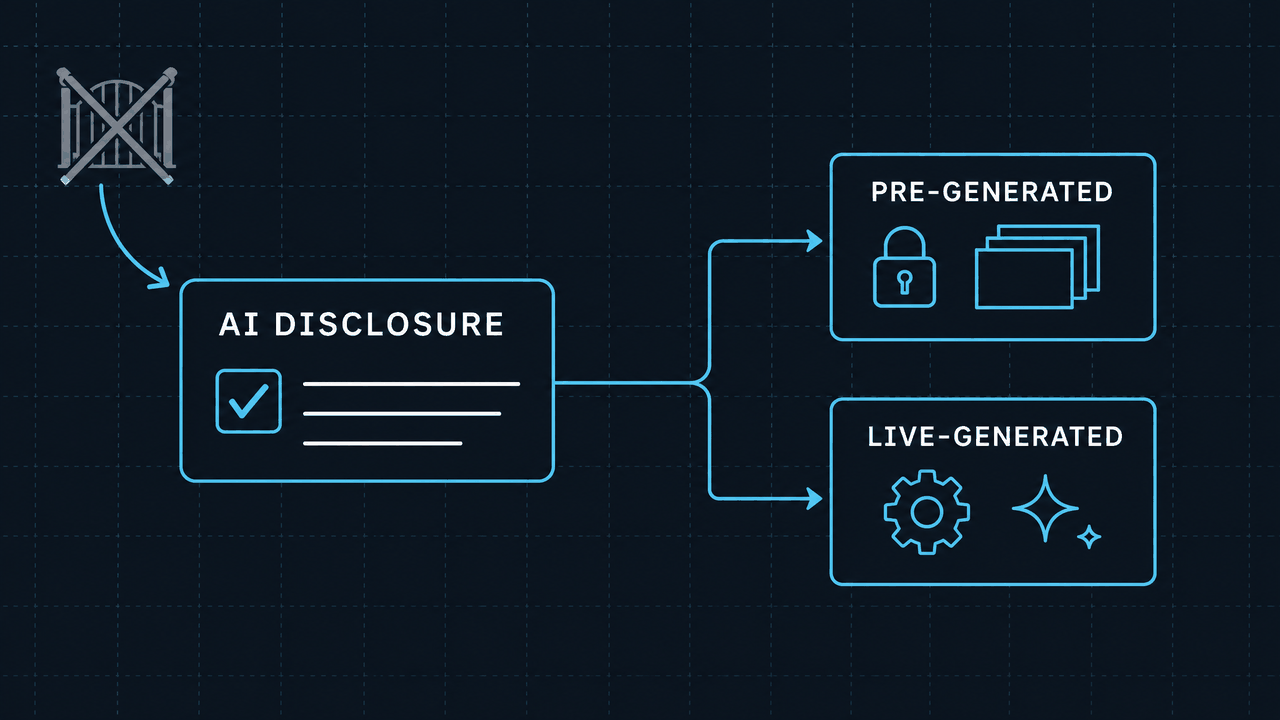
On January 10, 2024, Valve posted the update that actually changed things. Instead of rejecting AI games, Steam would now allow the vast majority of them, on one condition: you have to disclose.
The new rule added an AI disclosure section to the game submission form. You describe how your game uses AI, and Valve publishes much of that description on your store page so players can see it before buying. The form splits AI use into two buckets, and the distinction is the most important practical thing in the whole policy:
- Pre-generated content — anything made with AI tools during development. Art, audio, dialogue, marketing images. The stuff you generate, clean up, and bake into the build.
- Live-generated content — anything the game creates with AI while it's running on the player's machine. Think a chatbot NPC that improvises lines at runtime.
Live-generated content came with an extra string attached. Valve said it would add a system letting players report illegal content produced by a game's live AI, because if your game generates text and images on the fly, Valve can't pre-screen what it'll spit out. Pre-generated content is the easy case: you made it, it's fixed, you just have to say so.
For a solo dev turning a Veo or Kling clip into a sprite sheet, you're squarely in the pre-generated bucket. You tick the box, write a sentence, and ship. That's the whole burden now.
What changed for the better, and what still trips people up
The disclosure model worked, mostly because it stopped pretending Valve could police the training data of every model on earth. Adoption tells the story. As of mid-2025, around 8,000 Steam titles (about 7,800, or roughly 7% of the entire library) had disclosed generative AI use, up from about 1,000 a year earlier, according to VGC's reporting on the data. And among games released in 2025, somewhere around one in five disclosed AI use. That's not a fringe anymore.
But the 2024 form was clumsy in one specific way, and devs complained about it for two years. It didn't distinguish between AI that ends up in front of the player and AI that just helped you work faster. If you used Copilot to write some boilerplate, or an upscaler on a texture, or an AI tool to brainstorm names, did you have to disclose? The form's wording made a lot of people nervous enough to over-disclose, which muddied what the label even meant.
January 2026: efficiency tools get exempted
Valve cleaned this up. In a rewrite reported on January 17, 2026, the company "significantly" reworded the disclosure rules to draw a line that should have been there from the start. The new wording, in Valve's phrasing, is that "efficiency gains" from AI-powered dev tools "is not the focus" of the requirement.
So now there's a clean two-part test for what you actually have to disclose:
- AI used to generate content that reaches the player — in-game art, audio, text, plus store-page and marketing assets.
- AI that generates content at runtime — images, audio, or text produced while the game is running.
Code assistants, ideation tools, and AI features baked into software you use behind the scenes? No disclosure needed, as long as the output doesn't ship as player-facing content. That's a sensible boundary, and it's roughly where most experienced devs assumed the line was all along.
What this means if you're shipping AI assets today
Here's the honest version for anyone in this site's audience, the people generating video with Veo, Sora, Kling, or Runway and slicing it into sprites.
If your sprite animations started as an AI-generated video and you turned them into frames, you used AI to generate player-facing content. Disclose it. It's one sentence on the submission form, it does not block your release, and the days of Valve rejecting you for it ended in January 2024. The disclosure shows up at the bottom of your store page, most buyers never read it, and it has not stopped 8,000-plus games from shipping.
A few things still worth keeping straight:
- Disclosure is currently self-reported. Valve isn't running detectors on your build. That means the real number of AI games is higher than the disclosed number, and it also means honesty is on you. Lying on the form is a worse problem than the AI itself if it ever surfaces.
- The copyright question never fully closed. Valve moved past it by making it your responsibility to use assets you have the rights to, the same as any stock art or font. The 2023 rejection language about "rights to all of the IP used in the data set" didn't get deleted from reality, it got pushed downstream to you.
- Live-generated AI is the spicy category, not pre-baked frames. If your game just plays back sprite animations you exported ahead of time, you're in the simple bucket. The reporting system and the extra scrutiny are aimed at games that generate content on the fly.
The practical takeaway: there's a real advantage to AI that touches your pipeline but never ships raw. A clip generated in Kling and then hand-cleaned, recolored, re-timed, and cut into frames is still disclosed content, but it's content you control and own the edits on. Keeping the player-facing output as deliberate, fixed, exported assets, rather than something improvised at runtime, keeps you in the calmest corner of Valve's policy. That's the whole reason a tool like the Sprite Frame Extractor runs entirely in your browser with no upload: your frames are yours, you decide the loop and the timing, and what ships is a finished PNG sequence or APNG, not a black box.
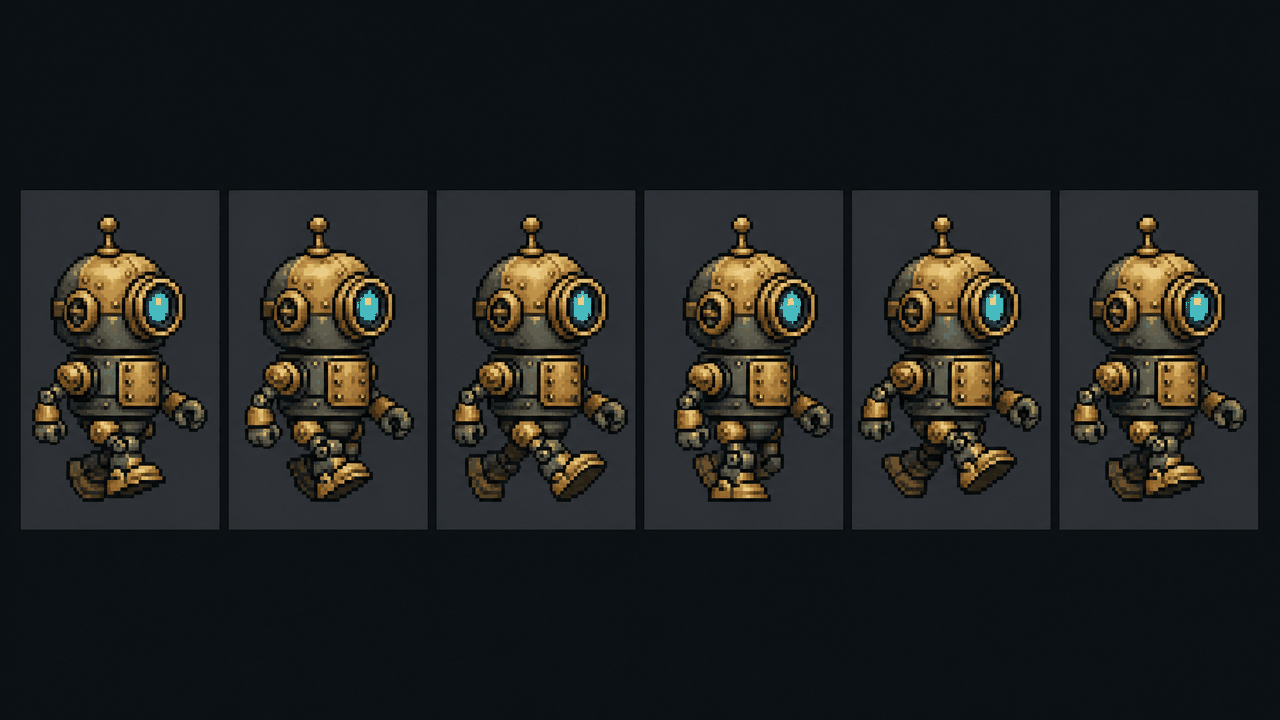
Valve spent about seven months going from "we can't ship this" to "just tell us." For indie devs, that's about as good an outcome as the AI-asset fight was ever going to produce.
FAQ
Q. Can you still get a game rejected from Steam for using AI-generated art?
Not for disclosed pre-generated assets. Valve quietly rejected AI games in mid-2023 over copyright uncertainty, but the January 10, 2024 policy reversed that. Now you disclose AI use on the submission form and the vast majority of games ship. The exception is live-generated content (AI that runs at runtime), which gets extra scrutiny and a player-reporting system, and any content you don't have the legal rights to use.
Q. Do I have to disclose AI use if I turned an AI-generated video into game sprites?
Yes. Frames derived from an AI-generated video are player-facing content created with AI, which is exactly what Steam's disclosure form covers. It's a single sentence on the submission form and it doesn't block your release. The disclosure appears on your store page, usually near the bottom.
Q. What did Steam's January 2026 rule change actually do?
It exempted AI 'efficiency' tools from disclosure. Per the rewrite reported January 17, 2026, code assistants, ideation tools, and behind-the-scenes AI features no longer need to be declared, as long as their output doesn't ship as player-facing content. You still must disclose AI used to generate in-game or marketing assets, and AI that generates content while the game runs.
Q. What's the difference between pre-generated and live-generated AI content on Steam?
Pre-generated content is anything made with AI during development and baked into the build, like art, audio, or exported sprite frames. Live-generated content is created by AI while the game runs on the player's machine, like a chatbot NPC improvising dialogue. Live-generated content carries the extra reporting system because Valve can't pre-screen what it produces.
Sources
- https://techcrunch.com/2023/07/03/valve-responds-to-claims-it-has-banned-ai-generated-games-from-steam/
- https://www.videogameschronicle.com/news/valve-is-reportedly-banning-games-featuring-ai-generated-content/
- https://kotaku.com/valve-ai-art-generator-steam-crypto-ban-metaverse-pc-1850590856
- https://gameworldobserver.com/2023/06/30/valve-bans-games-ai-assets-on-steam-copyright
- https://www.geekwire.com/2024/valve-software-reveals-new-rules-for-ai-powered-game-development-on-steam/
- https://www.gamesradar.com/valves-new-steam-policy-will-allow-the-vast-majority-of-ai-games-to-release/
- https://www.videogameschronicle.com/news/valve-has-significantly-rewritten-steams-rules-for-how-developers-much-disclose-ai-use/
- https://www.videogameschronicle.com/news/steam-games-disclosing-generative-ai-use-are-up-800-this-year/